Click here to see this email on your browser.
Böll EU Newsletter 01/2026 2.0
Capacity without coherence

Dear Friends,

Europe does not lack power. But too often, it lacks coherence and therefore seems weak.

This contradiction became glaringly visible last week.

At the World Economic Forum in Davos, Commission President Ursula von der Leyen underlined that Europe remains open to the world. Shortly thereafter, the European Parliament narrowly adopted a resolution calling for a legal opinion from the European Court of Justice on the EU-Mercosur agreement.

Formally, this concerns a legal review. Politically, it functions as a brake and potential delay. Precisely at a moment when Europe needs global partnerships.

Additional discomfort stems from the parliamentary constellation behind the vote: the majority was only possible with the far right, alongside parts of the pro-European centre. This once again exposes the fragility of political majorities in the European Parliament, and the deep fragmentation of Europe’s political space.

In our latest 3 Questions interview, Sven Giegold, Member of the German Green Party’s executive board, reflects on the political implications of this vote for Europe and the Greens.

But the European Parliament is not alone in this. Member States continue to struggle to agree on priorities. As a result, Europe’s institutions operate according to different political logics, timelines and incentives. Even when facing the same geopolitical environment.

External actors prey on this, hoping to deepen European divides. The most common outcome is that Europe hesitates, stalls or muddles through, not because it doesn’t have capacities, but because it falls short when it comes to aligning behind a shared direction and policy.

And too often this looks weak. Europe’s problem is not the absence of power, but the difficulty of organising it. And when it fails, a dangerous spiral emerges: Europe feels weak, hesitates to come together and act, and then reads this failure as further confirmation of its weakness. A self-fulfilling prophecy.

Reflecting on Trump’s Greenland threat, Ursula von der Leyen highlighted four ingredients that contributed to Trump’s climbdown: firmness, unity, preparedness and willingness to engage. This, together with a “Sell America” sentiment that unsettled markets, was crucial.

Europe doesn’t lack power. But it too often underestimates and underorganises it, due to divisions.

That’s why, as of today, we are kicking off a new LinkedIn series called #ProudEU. We want to counter the narrative that systematically talks Europe down. So, over the coming weeks, we will highlight Europe’s strengths, its challenges, and the strategic choices it faces in a more confrontational world.

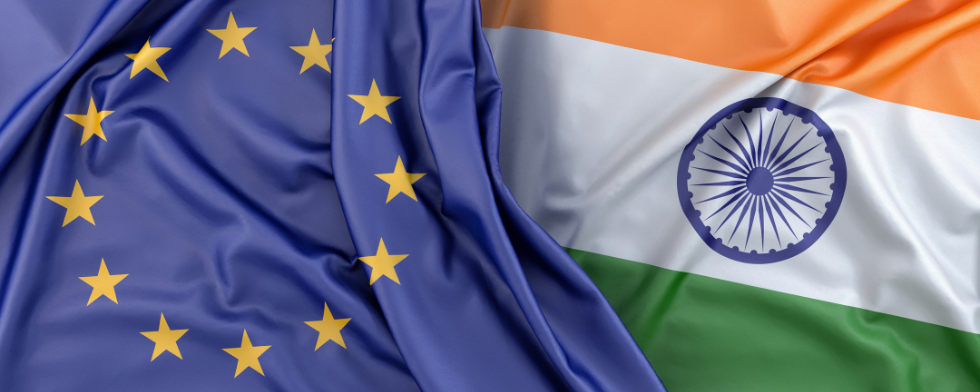
In the meantime, following this week’s historic EU-India summit, I invite you to explore our updated EU-India Dossier. You can also read MEP Hannah Neumann’s assessment of the protests in Iran, and our interview on Europe’s democracy shield with Alice Stollmeyer (Defend Democracy) and MEP Alexandra Geese.

Warm regards,

Roderick Kefferpütz
Director
Heinrich-Böll-Stiftung
European Union | Global Dialogue

Highlights

Dossier | EU-India Relations

As the world’s two largest democracies, the EU and India share a commitment to protecting and promoting human rights, a rules-based global order, effective multilateralism, sustainable development and open trade. Our updated dossier focuses on EU-India relations, also featuring content from our New Delhi regional office.


3 Questions on the EU-MERCOSUR agreement to Sven Giegold

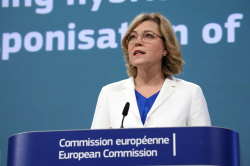
Against the backdrop of a fragmenting trade order, Commission President Ursula von der Leyen stressed at the World Economic Forum that Europe remains open to the world. But then, the European Parliament narrowly voted to request a legal opinion from the European Court of Justice on the EU-Mercosur agreement; a decision that could significantly delay its ratification.

The vote has triggered a heated debate about Europe’s trade policy, strategic direction, and the role the Greens play in this geopolitical context. We spoke to Sven Giegold, Member of the German Green Party’s federal executive board and responsible for European coordination.


From Budapest to Baden-Württemberg: European Greens With Defining Elections in 2026

2026 is shaping up to be an extraordinary electoral year in Europe and for the European Greens. Opinion polls indicate that national parliamentary elections could reshape governments in countries ranging from Denmark and Latvia to Slovenia. The most consequential contest may take place in Hungary, where a potential defeat of long-time right-wing leader Viktor Orbán could result in a more assertive European Union. At the regional level, the Greens face a key test in Baden-Württemberg, where they have led the state government for more than a decade.


3 Questions on the Iran protests to MEP Hannah Neumann

Iran is facing the most serious challenge to the regime in years. Unprecedented protests, a collapsing economy, and a brutal crackdown are pushing the system to its limits. What is happening on the ground, why this protest cycle is different, and what Europe must now do: we asked three questions to Hannah Neumann, Green MEP and Chair of the European Parliament’s Delegation for relations with Iran.

Read more
 

Interview | A Shield Without a Sword

In November, the European Commission unveiled the long-awaited Democracy Shield initiative, designed to counter threats such as disinformation and foreign interference. While it acknowledges the systemic risk European democracy faces, the Shield falls short of addressing its root causes: engagement-based algorithms, Big Tech dominance, geopolitical dependency, and deep divisions that make Europe vulnerable to polarising messages. An interview with Alexandra Geese, Green Member of the European Parliament.


Energy Transition Blog

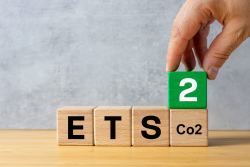
The EU can do: The Emissions Trading System is a slam dunk

With all of the grim news coming from the US and other places where climate protection is on a backfoot, it’s heartening to cast a glance at the EU’s Emissions Trading System, or EU ETS. Once considered a dud, this carbon market is now the EU’s most potent weapon in reducing greenhouse gas emissions. Paul Hockenos reports.


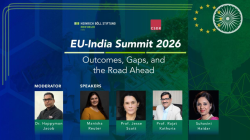
Webinar | EU-India Summit 2026 - Outcomes, Gaps, and the Road Ahead
29.01.2026, 9:30-10:30 CET

The EU–India Summit on 27 January 2026 took place amid heightened geopolitical uncertainty and shifts in the global order. Its strategic context has been shaped in part by German Chancellor Friedrich Merz’s recent visit to India, a key bilateral precursor.

As the EU and India increasingly position one another as essential partners, cooperation has deepened well beyond trade to include digitalisation and emerging technologies, green technologies, supply-chain resilience, climate governance, and defence and security cooperation. The Summit was expected to serve not only as a stocktaking exercise, but also as a signal of longer-term intent in an increasingly fragmented international system.

Against this backdrop, the Heinrich-Böll-Stiftung New Delhi invites you to join their upcoming webinar, jointly organised with the Council for Strategic and Defense Research (CSDR), which will critically assess the Summit’s outcomes—including, if realised, the long-anticipated EU–India Free Trade Agreement.

 
Photo credits:
Heinrich-Böll-Stiftung, All rights reserved
Пресс-службы Президента Российской Федерации, All rights reserved
Heinrich-Böll-Stiftung, All rights reserved
Alexandros Michailidis, Shutterstock, All rights reserved
Andrzej Rostek, Shutterstock, All rights reserved
Heinrich-Böll-Stiftung India, All rights reserved

The Heinrich-Böll-Stiftung is a German political foundation affiliated with the German Green Party (Alliance 90/The Greens). Its primary task is political education and advocacy in Germany and abroad. Our main tenets are ecology and sustainability, democracy and human rights, non-violence and justice. In our work, we place particular emphasis on gender democracy, equal rights for minorities and the political and social participation of migrants.

Our namesake, the writer and Nobel Prize laureate Heinrich Böll, personifies the fundamental principles we stand for: defence of freedom and human dignity, civic courage, open debate and the acknowledgement of art and culture as independent spheres of thought and action. As a think tank for green visions and ideas, we are part of an international network with 34 offices worldwide and with partner projects in more than 60 countries.

The Heinrich-Böll-Stiftung European Union represents the foundation vis-à-vis European and international institutions, associations, non-governmental organisations and media based in Brussels. The office is a main point of contact for individuals, groups and organisations from around the world interested in EU politics and policies. The future of the European project and the role of the European Union in the world are at the centre of our activities and efforts.

If you don't want to receive any more messages (to: unknown@noemail.com), you can unsubscribe here at any time.
Heinrich-Böll-Stiftung European Union | Global Dialogue
Rue du Luxembourg, 47-51
B-1050 Brussels
Belgium

Joan.Lanfranco@eu.boell.org
Website

Your personal data is confidential and will not be forwarded to Third parties according to our Privacy Policy.