Click here to see this email on your browser.
Böll EU Newsletter 01/2026
Europe in 2026: From Buying Time to Using It

Dear Friends,

2025 was the year Europe bought time. A defensive year, defined by tariffs, omnibuses and constant effort to maintain US support for Ukraine. All reactive, all necessary. And in many ways, Europe ended 2025 unscathed.

But 2026 cannot be 2025 on repeat.

Europe is at one of its weakest points in years. Geopolitically vulnerable, economically under attack, politically divided. We’re squeezed on all sides.

Geopolitically, Europe is squeezed between a revisionist US administration and a revisionist Russia. After the Venezuela episode, US territorial claims against Denmark have taken on a far more unsettling edge.

Economically, Europe is squeezed between a China whose state-subsidised exports are eroding its industrial base, and a United States that treats Europe as a captive market; a buyer of American goods and an open field for US tech giants. Delivering on the green and digital transitions will remain a challenge.

Politically, Europe is squeezed between the growing fragility of democratic coalitions, and the rise of far-right political parties emboldened and supported by authoritarians abroad. 2026 brings important regional and municipal elections in countries such as Germany and France. It is also a transition year, setting the stage for decisive elections in 2027 in France, Italy, Spain and Poland.

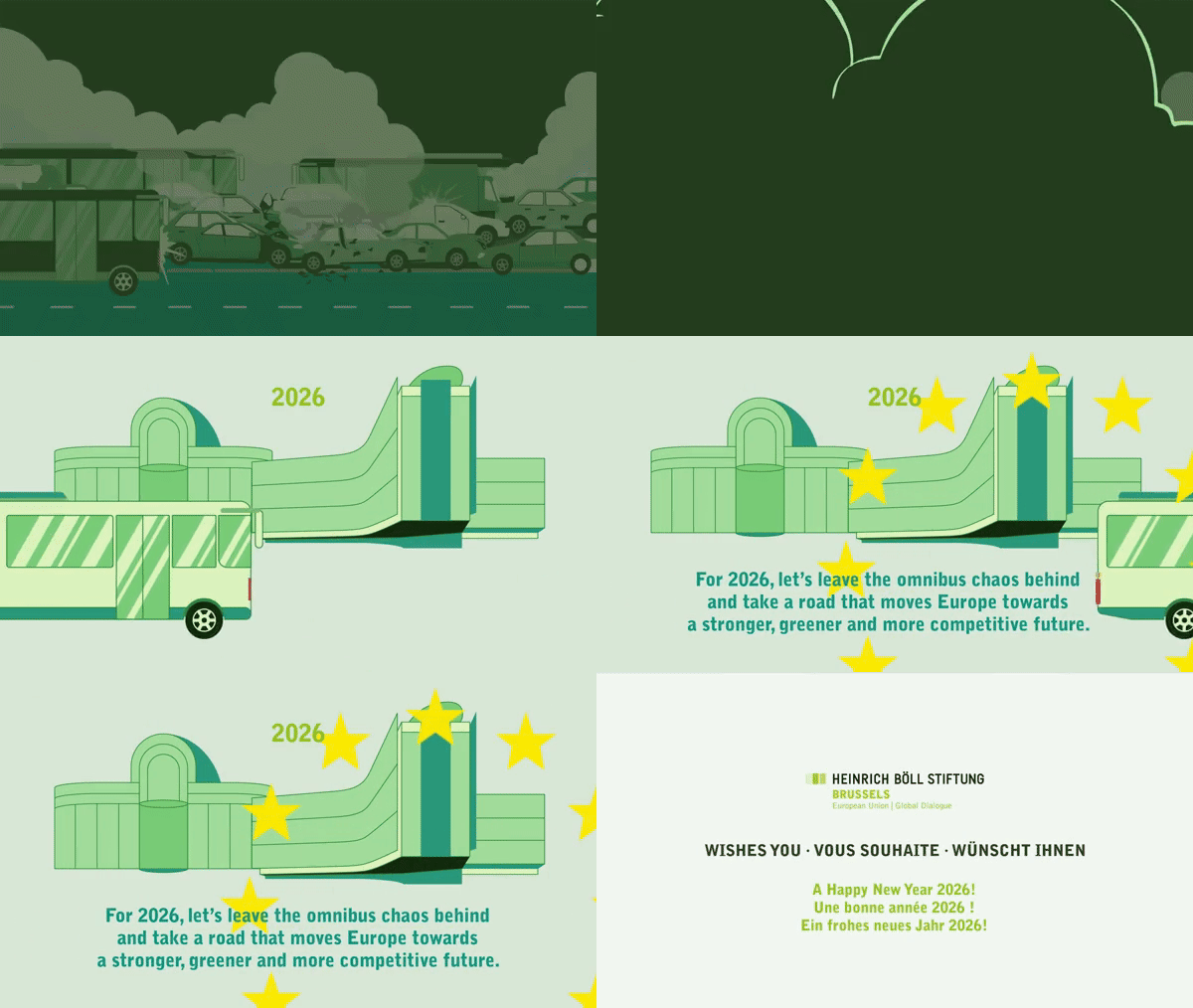
Our New Year’s card depicts 2025 as the year of omnibuses and traffic jams: little movement, little progress. Holding the status quo. Revising past legislation. Editing the already accomplished.

But you don’t pursue an “independence moment” (Ursula von der Leyen) with bureaucratic de-bureaucratisation. You don’t omnibus your way to European sovereignty.

If 2025 was the year of buying time, 2026 is about using it. And moving full speed ahead.

There are enough arenas to watch. Our work in 2026 will focus on the following:

  • In our EU and International Politics programme, we will examine how global power shifts are reshaping the EU’s role in the world. A particular focus will be on Europe’s security and defence relationships with Indo-Pacific partners, especially EU-India relations. In this vein, we will launch a study tour to India to deepen strategic exchange.
  • In our Green Economic and Social programme, we will closely follow the debate on the next Multiannual Financial Framework. A strong MFF is a foundation for European sovereignty. Our MFF dossier outlines what this means across key policy fields. We will also continue to foster transatlantic dialogue on green industrial policy, with a focus on the Clean Industrial Deal.
  • In our Climate, Agriculture and Trade programme, we will convene an expert group on the future of the EU’s trade strategy, asking how sustainability can be advanced in an increasingly disorderly trade environment. We will also look closely at the Circular Economy Act and the role of trade and recycling policy in strengthening Europe’s resource security.
  • In our European Energy Transition programme, we will build on our work on the social dimension of the energy transition, with a particular focus on affordability and fairness, which are key conditions for maintaining public support for climate action. We also plan to continue our networking for networks series, and have a policy brief on the tremendous costs and risks of small modular reactors.
  • In our EU Democracy and Digital Policy programme, we will launch a strategic project with the Green European Foundation on the EU’s digital ecosystem: how democracy can be resilient in the age of AI and disinformation, and how the EU can assert its values and interests in an increasingly contested digital space.
  • And with regards to Gender Democracy, we are working on the upcoming EU gender equality strategy, as well as focusing on recent voting trends among young men, examining their drivers and the role of influencers.

This month we will also launch a LinkedIn series highlighting Europe’s often underestimated power and agency.

These are initial snapshots of our planned work for 2026.

In the meantime, I invite you to read our new Global Power Shifts dossier, the latest World Nuclear Industry Status Report, which we will present jointly with the Friedrich-Ebert-Stiftung in the coming weeks, and a recent study by Carnegie Europe, which we supported, on how foreign capital in the Western Balkans carries the risk of undermining governance standards.

As always, do also save the date for our annual Foreign Policy Conference, taking place on 29 January 2026.

Warm regards and all the best for 2026,

Roderick Kefferpütz
Director
Heinrich-Böll-Stiftung
European Union | Global Dialogue

Highlights

Dossier | Global power shifts

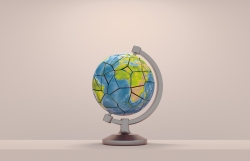
Global power shifts are changing international relations and the repercussions are felt around the globe. This web dossier by the Heinrich-Böll-Stiftung explores these changes. The contributions discuss how non-major power actors respond, the prospects of (cross-)regional cooperation and a potential role for the European Union.


Analysis | Montenegro’s Choice Between Multiplying Deals or Setting Regional Standards

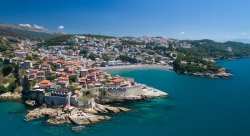
Montenegro stands at a crossroads: Will it normalise exceptional, deal-driven investment practices, or set regional standards for transparent and rule-based development? The EU has a critical opportunity to guide this process, supporting Montenegro’s commitment to the rule of law and ensure that growth strengthens institutions rather than erodes them. As deal-based investment frameworks gain traction across the region, the EU must act to prevent corrosive capital from becoming the norm.


World Nuclear Industry Status Report 2025

The World Nuclear Industry Status Report 2025 (WNISR2025) assesses on 589 pages the status and trends of the international nuclear industry. It provides a comprehensive overview of nuclear power plant data, including information on operation, production, fleet age, construction, and decommissioning of reactors.


Rules or Deals? The EU's Challenge in Regulating Corrosive Capital in the Western Balkans

The United Arab Emirates has become a major investor in the Western Balkans. With enlargement back on the agenda, the EU must ensure that foreign capital meets rather than undermines its governance standards.

Read more
 

26th Foreign Policy Conference
29.1.2026, 13:00-19:00 CET

Following the adoption of the revised 'Framework Guidelines for Comprehensive Defence' by the Traffic Light coalition in June 2024, the strengthening of civil defence and protection, intelligence services, and the protection of information technology systems, which was pushed through by Alliance 90/The Greens as part of Germany’s debt brake reform, has politically and financially anchored a security understanding that integrates both military and civil resilience. The current government coalition agreement promises to enshrine measures for comprehensive defence as a “paramount public interest and prioritize them over other state tasks”. Where do we stand today? And what international lessons can guide us in adapting to a rapidly evolving security landscape?

The 26th Foreign Policy Conference of the Heinrich-Böll-Stiftung takes these questions as its starting point and looks beyond national approaches. What can we learn from Sweden's and Singapore's 'Total Defence' model, or Estonia's cyber resilience strategies? How can Germany implement its new framework guidelines? Can resilience become a new guiding principle for defence in the 21st century? What international legal issues arise? And should security and defence at all rely on the involvement of the entire population?

Join the conference on 29 January!

 
Photo credits:
Laurent Nyssen, All rights reserved.
Alberto Andrei Rosu | Shutterstock, All rights reserved.
Katja Giebel, All rights reserved.
A Mycle Schneider Consulting Project, All rights reserved.
Getty, All rights reserved.
Heinrich-Böll-Stiftung, All rights reserved.

The Heinrich-Böll-Stiftung is a German political foundation affiliated with the German Green Party (Alliance 90/The Greens). Its primary task is political education and advocacy in Germany and abroad. Our main tenets are ecology and sustainability, democracy and human rights, non-violence and justice. In our work, we place particular emphasis on gender democracy, equal rights for minorities and the political and social participation of migrants.

Our namesake, the writer and Nobel Prize laureate Heinrich Böll, personifies the fundamental principles we stand for: defence of freedom and human dignity, civic courage, open debate and the acknowledgement of art and culture as independent spheres of thought and action. As a think tank for green visions and ideas, we are part of an international network with 34 offices worldwide and with partner projects in more than 60 countries.

The Heinrich-Böll-Stiftung European Union represents the foundation vis-à-vis European and international institutions, associations, non-governmental organisations and media based in Brussels. The office is a main point of contact for individuals, groups and organisations from around the world interested in EU politics and policies. The future of the European project and the role of the European Union in the world are at the centre of our activities and efforts.

If you don't want to receive any more messages (to: Neele.Hartel@eu.boell.org), you can unsubscribe here at any time.
Heinrich-Böll-Stiftung European Union | Global Dialogue
Rue du Luxembourg, 47-51
B-1050 Brussels
Belgium

Joan.Lanfranco@eu.boell.org
Website

Your personal data is confidential and will not be forwarded to Third parties according to our Privacy Policy.