Dear friends,
Something is shifting in Brussels. Europe is turning more confident. Trump’s failed grab for Greenland provided the EU with a much-needed win (even if the broader dynamics are more complex).
On social media, pro-EU accounts celebrating Europe’s strengths are mushrooming. France and Germany are on a social media roll, trolling Trump, projecting confidence. There’s a visible rally around the European flag.
And Member States are increasingly moving forward outside of the EU-27 unanimity framework:
- The European Council authorised €90 billion in support for Ukraine via enhanced cooperation among 24 Member States, bypassing Czechia, Hungary and Slovakia.
- Several EU and NATO allies, including Germany, France, Finland and Sweden came together to send troops to Greenland.
- Early this year, the finance ministers of Germany, France, Italy, the Netherlands, Poland and Spain formed an “E6 Finance Ministers” coalition to push forward the European Savings and Investment Union.
- And the “E5 Defence Ministers” coalition of France, Germany, Italy, Poland and the (non-EU) United Kingdom, announced joint projects in the field of defence. The German defence minister has even suggested this could turn into a European “Five Eyes” intelligence format.
“Coalitions of the willing” is the European name of the game. And more leaders are calling for it.
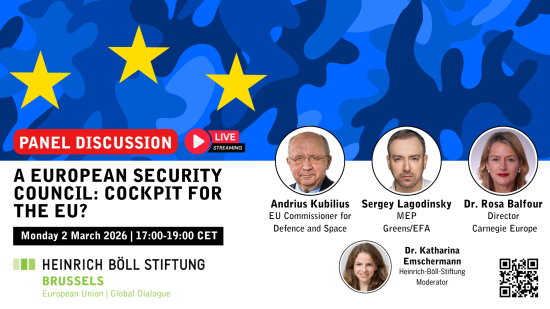
Mario Draghi has called for “’pragmatic federalism’. Pragmatic, because we must take the steps that are currently possible, with the partners who are currently willing, in the domains where progress can currently be made.” Commission President Ursula von der Leyen has explicitly argued for stepping up enhanced cooperation. And EU Commissioner Kubilius and MEP Sergey Lagodinsky have proposed a "European Security Council" as a new format to speed up decision-making.
These are tender spring blossoms in a harsh season; subtle shifts that may seem negligible today, but could turn strategically relevant if the trend continues.
They point toward one possible way to address the EU’s principal contradiction: Pooled sovereignty augments power, but the way sovereignty is pooled prevents that power from being used. Variable geometry and flexible coalitions are one effective way forward.
Or, as Audre Lorde put it, we must “recognise difference as a crucial strength…In our world, divide and conquer must become define and empower.”
Because, if we act together, we may “rediscover something that has long been dormant: our pride, our self-confidence, our belief in our own future”. (Draghi)
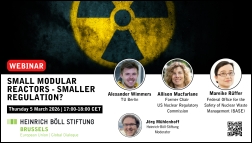
On this note, I invite you to continue your engagement with our LinkedIn series highlighting Europe’s strength, join the livestream of our panel discussion with EU Commissioner Kubilius on 2 March, and stay tuned for our webinar on the risks of small modular reactors, which will feature Allison Macfarlane, former chair of the US Nuclear Regulatory Commission.
Warm regards,